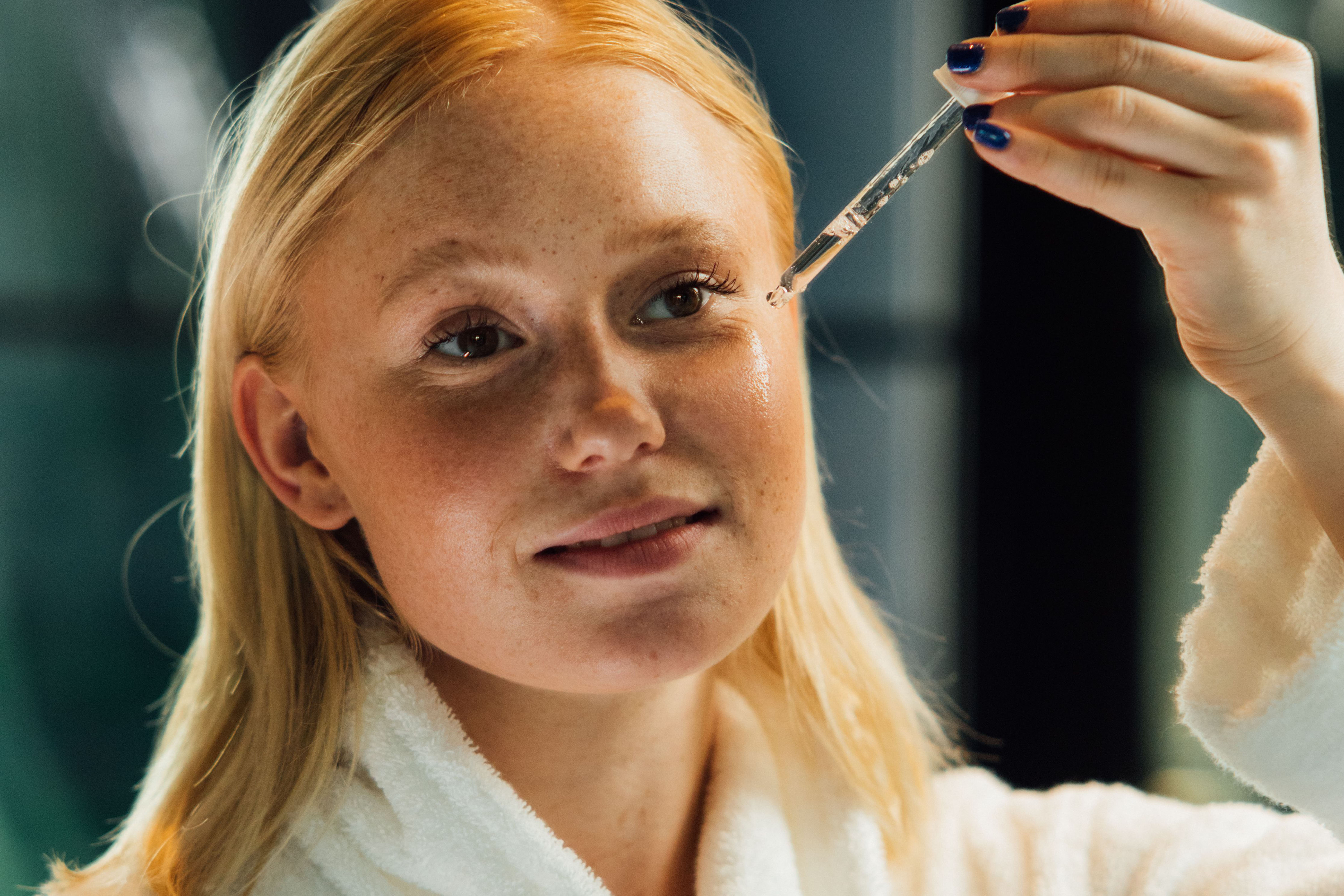
The $200 Serum Is Not the Problem
There are 11-year-olds spending $200 on anti-aging serum at Sephora, and we're calling this a phase. I do want to gently push back on that, because it isn't just a phase. It's something closer to an illness of the environment our daughters are growing up in. And if we treat it like a passing fad, we miss the chance to help them with what's actually going on underneath.
I think about this a lot, because the same pattern shows up again and again in the mothers I work with. A daughter fixates on a product, a look, a filter, a number. The mom understandably wants the behavior to stop. But the behavior was never really the point.
The Question We Skip
When your daughter reaches for a $200 anti-aging serum at the age of 11, the most important question isn't “how do I get her to stop spending?” It's “what is she actually trying to fix?”
Because she is trying to fix something. It just usually isn't her skin.
Does she feel deep down that she's not enough? Does she feel not beautiful? Does she feel that if she doesn't have this product, she won't fit in with her peers who do? Or that not spending the money somehow makes her less than the girls around her?
That's the layer underneath the purchase. And it's the layer most of us never get to because we're only focused on the thing we can see.
Why Fixing Only The Behavior Backfires
Here's what I've learned, both from my own life and from coaching mothers through moments like this.
When you try to only fix the behavior, you create more resistance.
You take away the serum, you set the spending limit, you give the lecture, and to her it lands as judgment or feels like unfair punishment. It feels like you don't understand her.
And in a way, she's right, because what she actually needs you to understand is the need beneath the behavior, not the behavior itself.
So the harder you push on the surface, the more she digs in, hides, or simply expresses the feeling somewhere else, like a developing a phone addiction or eating disorder. You haven't resolved anything. You've just taught her that this part of her isn't safe to bring to you.
She Often Can't Name It Either
This is the part that asks the most patience from us as parents.
Your daughter frequently can't articulate what's really going on. Teenagers aren't self-aware to the level we are as adults. She may genuinely not know that the serum is standing in for a feeling of not being enough.
So when we demand explanations, or when we expect her to justify herself, we're asking for something she doesn't yet have the words or self-awareness for.
What she needs instead is a safe space and a sounding board. Someone she can think out loud with, without being corrected or fixed, until she can actually arrive at the realization herself: it's because I don't feel like I'm enough, and I'm trying to fix that with a serum.
When she says it out loud, she might even laugh at how it sounds. And here's the thing I want every mother to get: she is completely capable of arriving at that conclusion on her own when she's given the right conditions.
Our job isn't to hand her the answer. It's to create the conditions where she can find it, and to continue enabling her to develop her neural pathways for self-awareness and critical thinking.
What This Looks Like In Practice
I'm not suggesting you ignore the $200 charge or pretend the behavior doesn't matter. Boundaries still matter. But the order of operations matters more than most of us realize, which is the whole premise of the SAFER Method.
Lead with curiosity before correction.
Instead of opening with "you are not buying that," try getting genuinely curious about what the product represents to her. What does she think it will change? How does she imagine she'll feel once she has it? What does she notice about the girls who seem to have it all figured out?
These questions aren't a trick to get her to stop. They're a way of meeting the real need, which is to feel understood rather than managed.
When a girl feels that her mother is trying to understand her instead of police her, the resistance softens. She’s less motivated to hide. And slowly, the underlying belief that drives so much of this behavior, the quiet "I'm not enough," starts to surface and lose its grip.
The Work Underneath The Work
The reason I care about this so deeply is that the serum is only one version of a problem that will keep changing shape. Today it's skincare. Tomorrow it's a filter, a number on a scale, a comparison to someone online. If we only ever address the behavior in front of us, we'll be playing whack-a-mole for years.
But if we learn to address the underlying motivation, the unmet subconscious need, we give our daughters something far more durable than a rule. We help them feel enough from the inside out, which is the only thing that actually quiets the urge to fix themselves from the outside in.
That's the heart of the work I do with mothers through the SAFER Method. It helps you see what's actually beneath the behavior, so you can respond to the need and not just the symptom. You can learn more about it here: https://dream-method.com/teens-safer
So the next time your daughter fixates on something that makes no sense to you, try resisting the urge to fix the behavior first. Get curious about the feeling underneath it. That's usually where the real conversation, and the real healing, begins.
I'd love to hear from other parents on this. What's something your child fixated on that turned out to be about something else entirely?